
A lot of craft rooms look pretty at first, but after a few weeks, the same problems start showing up again. The table gets buried, tools disappear, fabric spreads everywhere, and the room somehow feels stressful instead of inspiring. Most of the time, it is not because you need a bigger room. It is because a few setup mistakes are making the space work against you.
The good news is that once you notice those mistakes, they are usually much easier to fix than you think. Small changes can make a craft room feel calmer, more practical, and much easier to keep organized.
These are the craft room setup mistakes I would never make again if I were starting over.
1. Trying to make every corner do everything
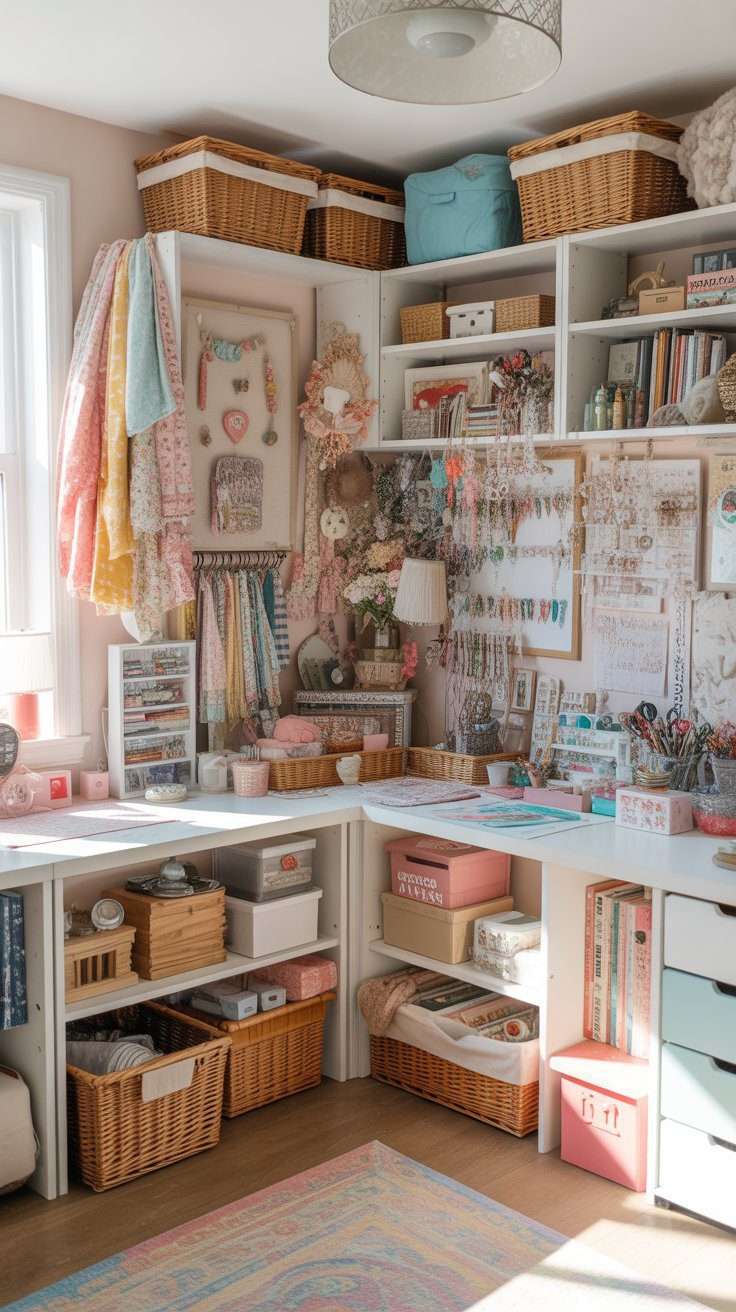
One of the fastest ways to make a craft room feel chaotic is giving every corner too many jobs. When one area is supposed to hold fabric, store tools, display decor, and work as an extra workspace, the room starts feeling cluttered almost immediately.
A craft room works better when each area has a more defined purpose. Your main table should be your main work zone. Storage should stay in storage zones. Shelves should support the way you actually create, not just hold random leftovers that have no real home.
This is especially important in smaller rooms, where every inch matters more.
2. Keeping everyday tools too far from the main work area
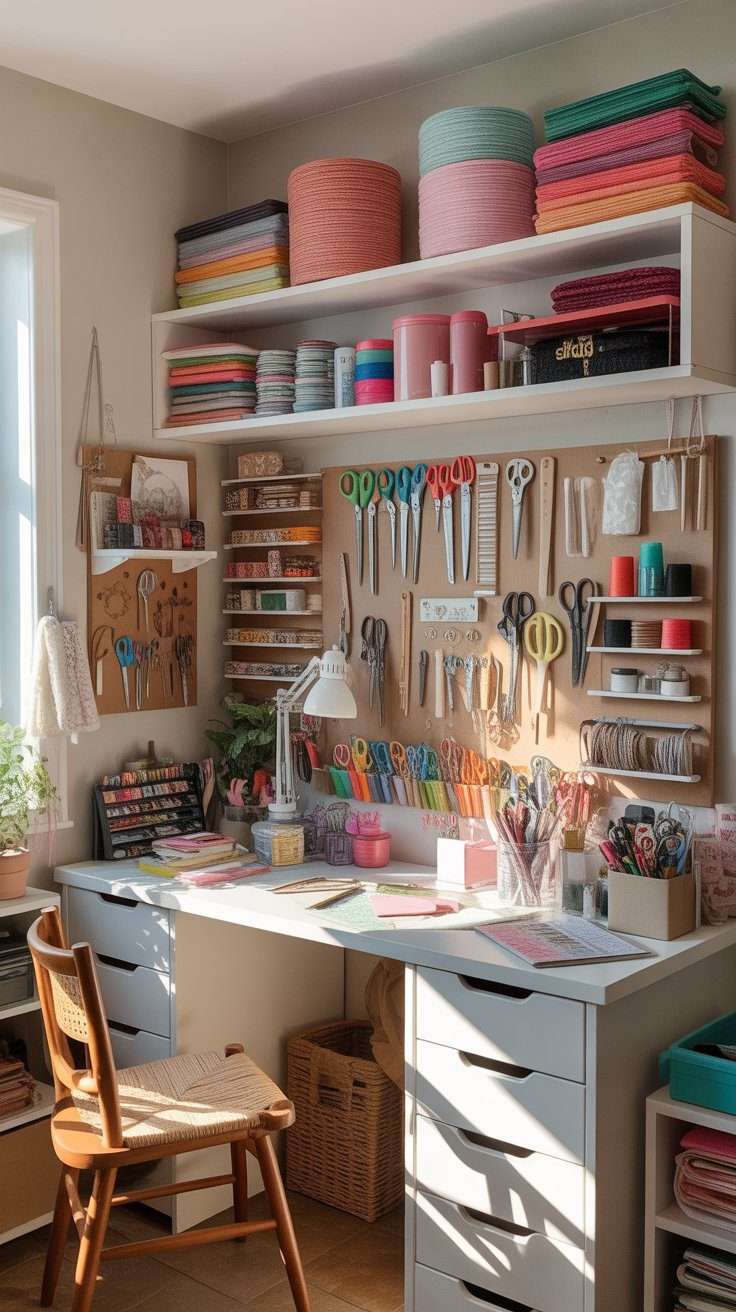
If you use the same supplies every time you sit down to make something, those supplies should not be buried across the room.
Scissors, rulers, clips, tape, glue, rotary cutters, thread, pens, and measuring tools need to live close to your main workspace. Otherwise, you waste time getting up, hunting for things, and creating mess just to finish a simple project.
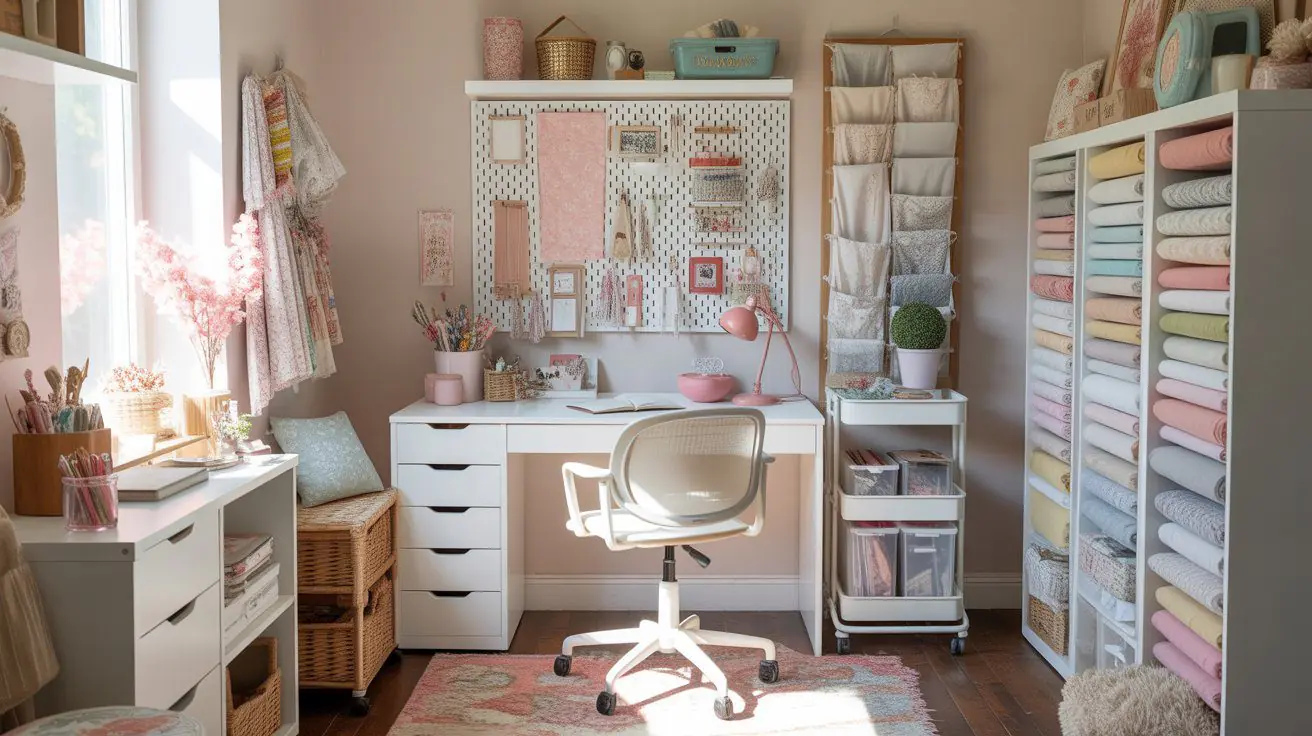
This is one of those mistakes that seems small at first, but it adds friction to every single creative session. A better setup keeps your most-used supplies within arm’s reach, whether that means a pegboard, a desk caddy, a rolling cart, or a shallow drawer system near the table.
If sewing tools tend to pile up everywhere take this idea.
- desk organizer
- rotating supply caddy
- acrylic drawer unit
- small tool tray
3. Letting fabric take over the entire room
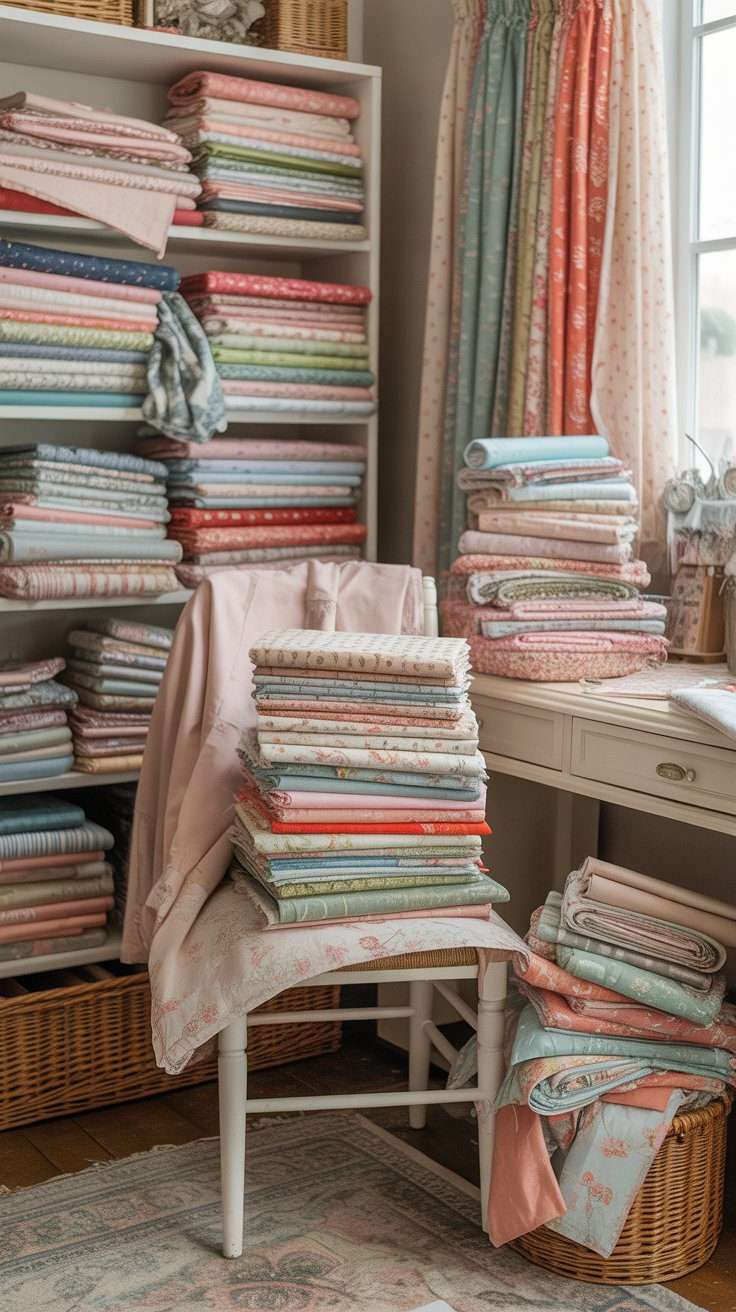
Fabric is one of the easiest things to lose control of in a craft room. It starts with a few folded stacks, then a basket of scraps, then a pile on the chair, and suddenly the whole room feels smaller.
One mistake I would never make again is treating fabric like it can live anywhere. It really needs its own zone. Whether that is one shelf, one cabinet, clear bins, baskets, or a rolling cart, fabric feels much more manageable when it has boundaries.
If fabric storage is one of the main things making your room feel crowded, take this idea.
- clear storage bins
- cube shelves
- fabric baskets
- rolling utility cart
- label maker
4. Using the craft table as storage instead of workspace
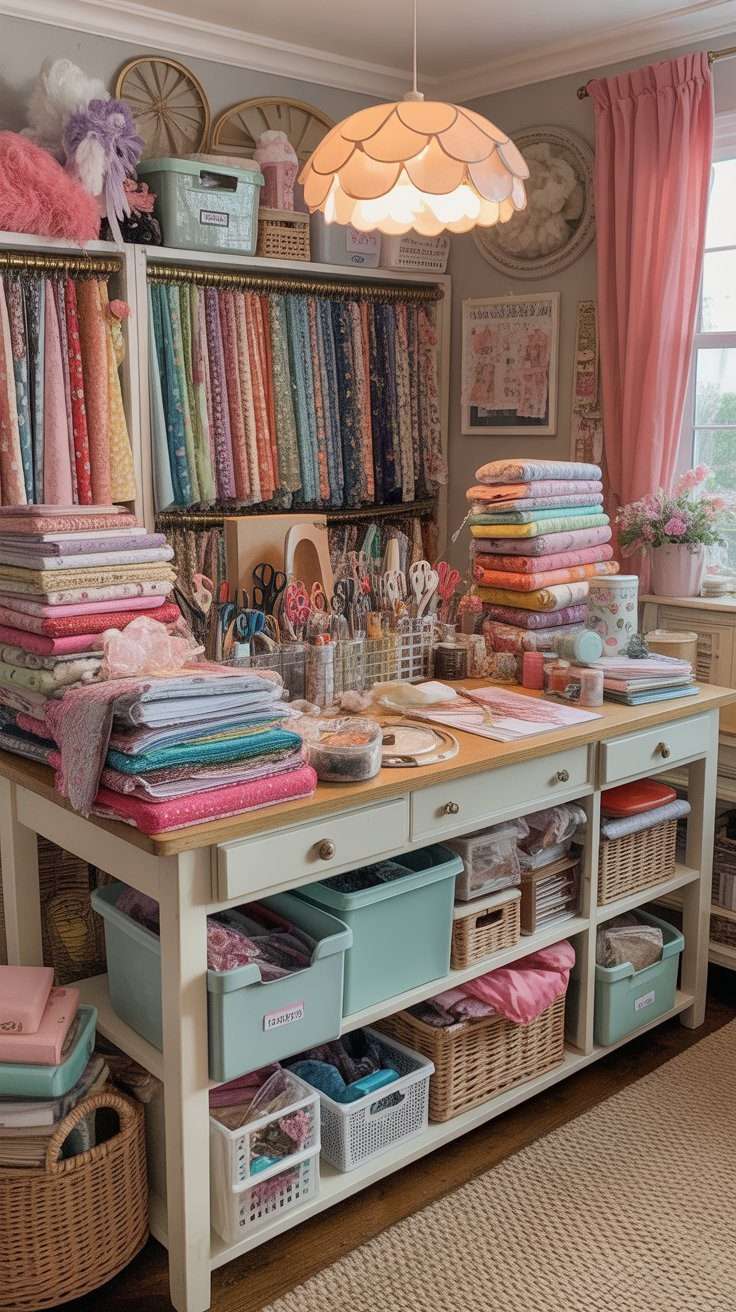
This is one of the biggest mistakes in almost every small craft room.
The craft table is supposed to make it easier to create. But once it becomes a place to store bins, stacks of fabric, random supplies, unfinished projects, and decorative items, it stops functioning the way it should. Then every project begins with moving things around, which makes the room feel tiring before you even start.
I would never set up a craft room again without protecting the table as a working surface first. A few essentials on the table are fine, but permanent overflow storage is what turns it into a problem.
5. Adding more furniture before using wall space
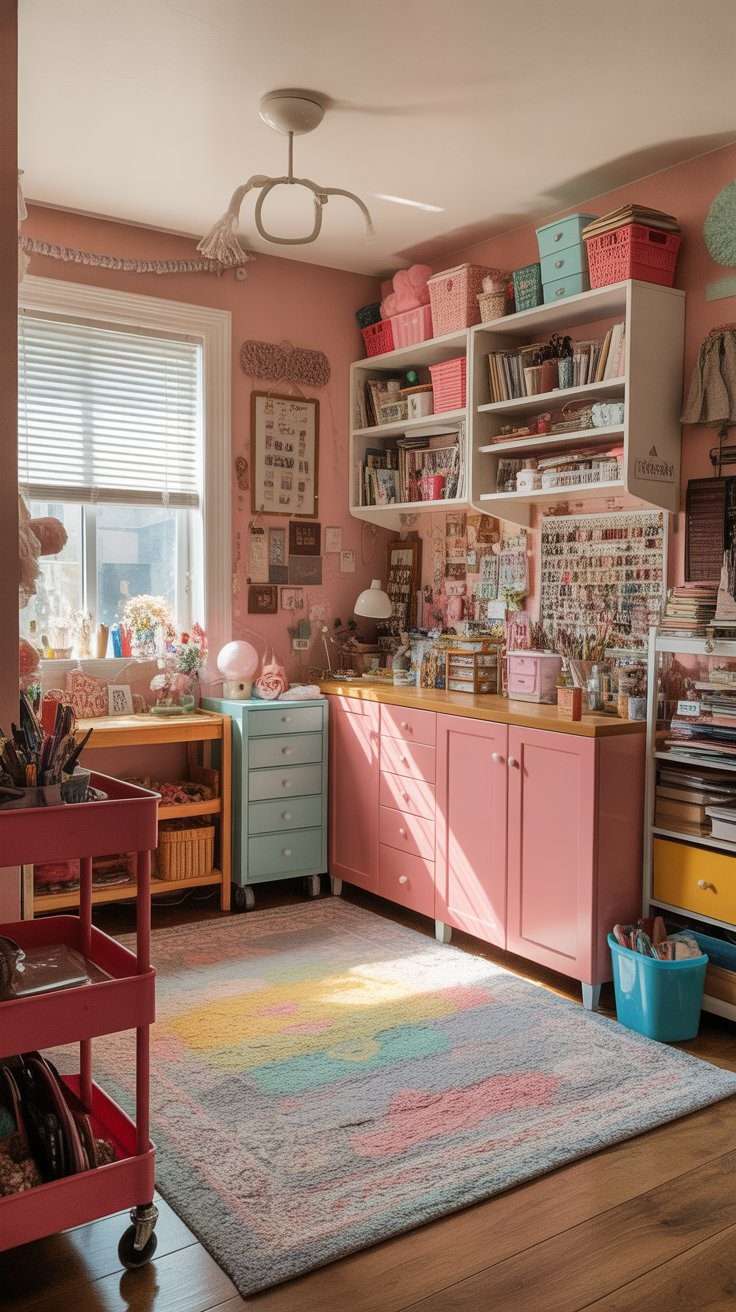
When a craft room feels full, the first instinct is often to add another cabinet, another cart, or another shelf unit. But sometimes the real problem is that the vertical space is not doing enough.
Walls can hold a surprising amount. Pegboards, floating shelves, hooks, rails, and hanging baskets can take pressure off the desk and floor without making the room feel heavier.
If I were setting up a craft room again, I would use the wall space sooner and more intentionally. It is often the easiest way to make a room feel more open while still adding storage.
6. Choosing storage that looks nice but is annoying to maintain
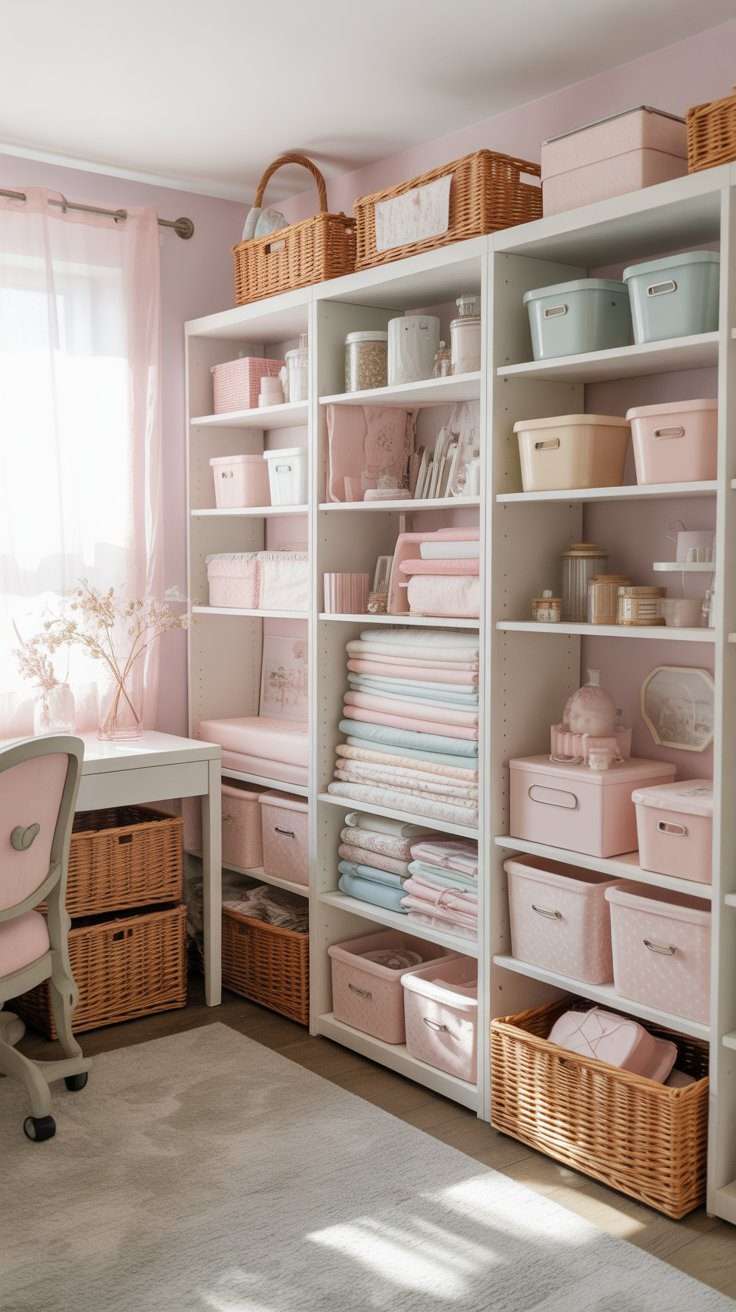
This is such a common mistake, especially when you are inspired by pretty rooms online.
A storage system can look beautiful in a photo and still be terrible in real life. If it takes too long to reset, refold, sort, or restack everything, it probably will not stay organized for long.
That is why I would never build a craft room around a system that is too delicate to maintain. Easy-to-reset storage usually wins. Clear bins, simple baskets, shallow drawers, and open containers are often much more realistic than complicated systems that only look neat when styled perfectly.
A craft room does not need to be perfect every minute. It just needs to be easy to return to order.
7. Mixing current projects with backup supplies
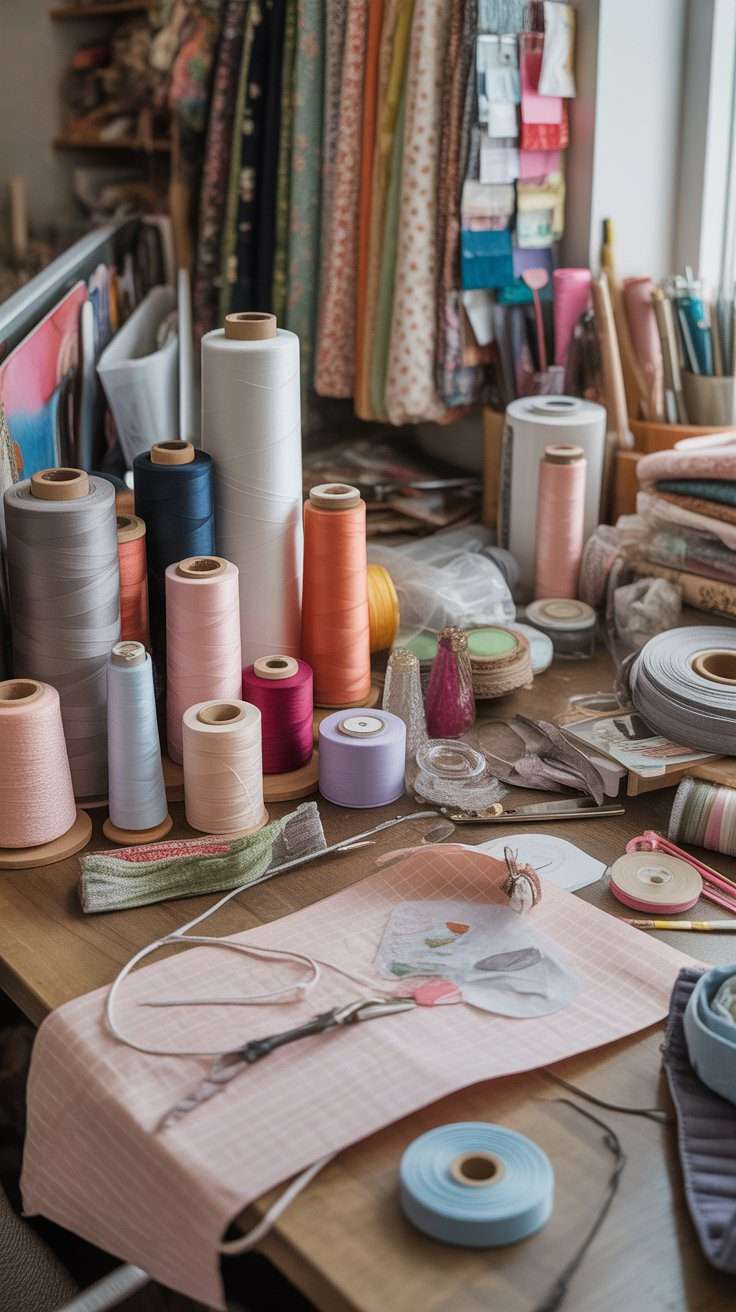
Another setup mistake that makes a craft room feel more stressful is storing everything together.
Your current project should not be fighting for space with extra ribbon, seasonal fabric, unopened supplies, and backup tools. That mix makes the room feel visually noisy, and it is much harder to keep track of what you are actually using.
A better setup separates active projects from long-term storage. Your current project can live in a basket, tray, or small cart near your work area. Backup materials can stay farther away on shelves, in drawers, or in bins.
This one shift can instantly make a room feel calmer, especially in smaller spaces.
8. Organizing the room around looks instead of workflow
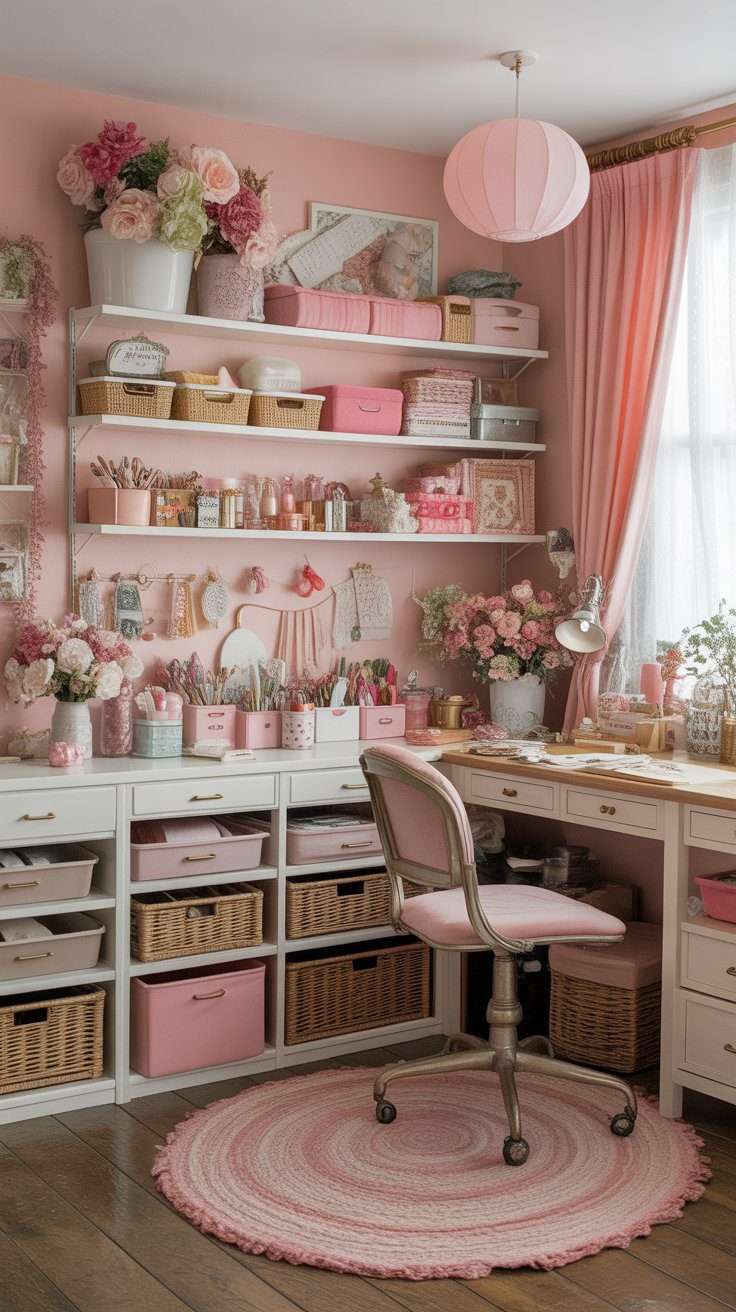
It is easy to copy a pretty craft room and assume it will work the same way for you. But every crafter works differently.
If you sew often, your room should support sewing first. If you work more with paper crafts, painting, vinyl, embroidery, or mixed media, your layout should reflect that. One of the worst mistakes is building the room around a look that does not actually match how you create.
That is why a room can look beautiful and still feel frustrating.
I would always organize around workflow first now. What do I use most? What creates the biggest mess? What do I need to reach quickly? What do I need to store out of sight? Those questions matter more than whether the room looks perfect at first glance.
9. Ignoring how the room feels when you are stressed or tired
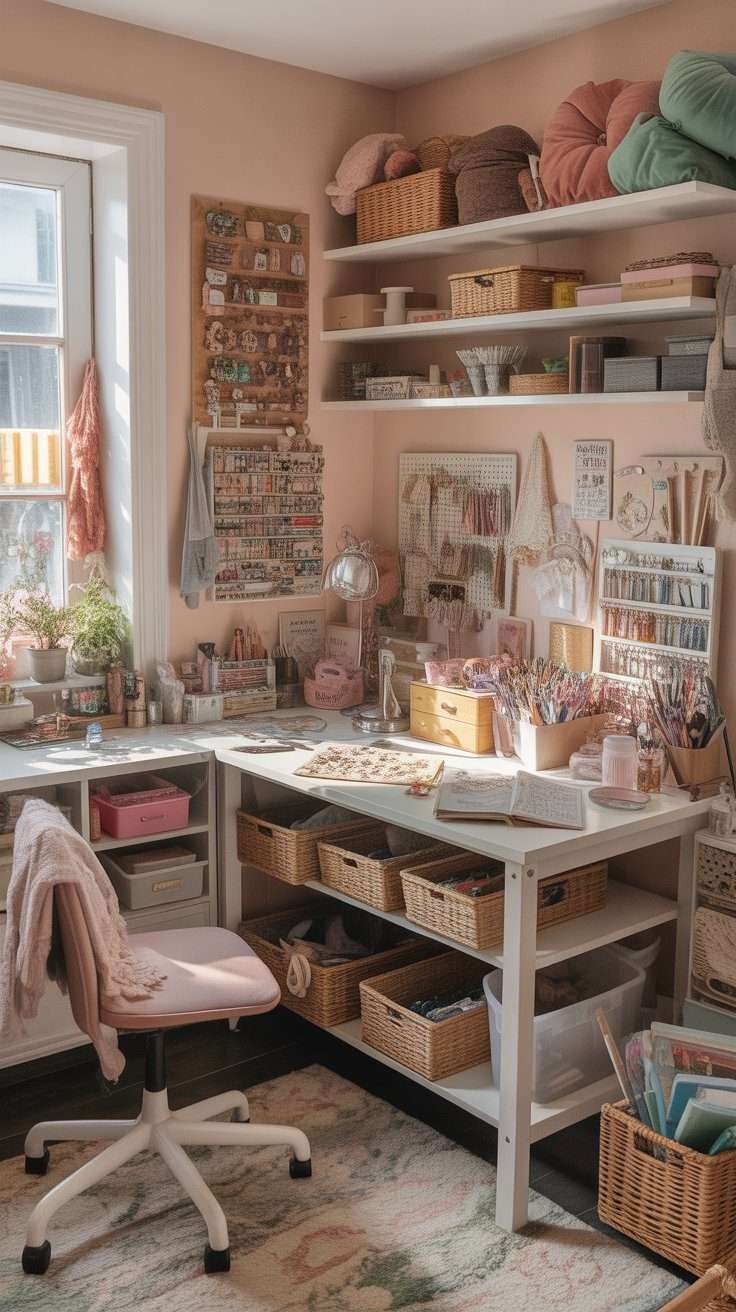
A lot of setup advice sounds good when you are motivated. But real life is different.
If your room only works when you have the time and energy to keep everything perfectly styled, it is probably not set up in a sustainable way. I would never ignore the “tired version” of myself again when planning storage.
Can I put things away quickly? Can I reset the room in five minutes? Can I leave a project halfway done without making the whole room feel chaotic?
Those are the questions that make a craft room livable. A room that supports you on messy days is worth much more than one that only looks good on clean days.
10. Thinking a small room cannot be both pretty and practical
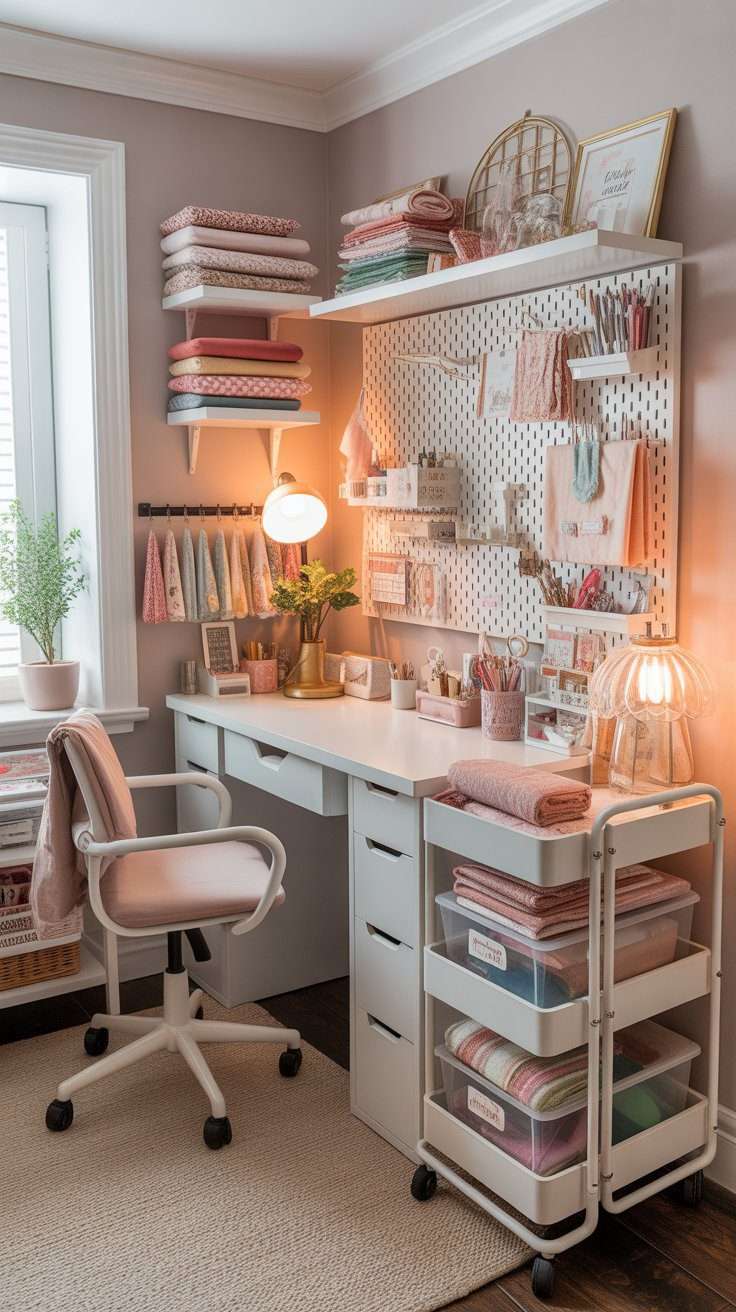
This might be the biggest mindset mistake of all.
A small craft room absolutely can feel beautiful and useful at the same time. But it usually happens when function comes first and the pretty details come after. Once the layout works, the storage makes sense, and the table stays usable, then the room can start feeling calm, cozy, and personal too.
Final thoughts
If I were setting up a craft room again, I would focus much less on making it look full and much more on making it feel easy to use.
That means a real work zone, tools close by, fabric with boundaries, storage that resets quickly, and a table that stays usable. Those small decisions change everything. A room does not have to be large or expensive to work beautifully. It just needs to support the way you actually create.
If you are still building your space step by step, these posts will help you keep going in the right direction: [fabric storage ideas for a small craft room](INSERT LINK), [craft room organization ideas for sewing supplies](INSERT LINK), [small craft room ideas that actually work](INSERT LINK), and [12 craft room ideas that make sewing and crafting easier](INSERT LINK). Those are the strongest nearby pieces in the cluster your site is already building.
FAQ
What is the biggest mistake in a craft room setup?
One of the biggest mistakes is using the craft table as storage instead of keeping it as a usable workspace. Once the table is buried, the whole room becomes harder to use.
How do I set up a small craft room without feeling overwhelmed?
Start with one main work zone, keep your everyday tools nearby, give fabric and supplies clear homes, and choose storage that is easy to reset. Small rooms work better when every area has a purpose.
Should I use open storage or closed storage in a craft room?
Usually a mix of both works best. Open storage is great for things you use often, while closed storage helps reduce visual clutter and makes the room feel calmer.
What products are worth buying for a craft room setup?
Some of the most helpful items are clear bins, a rolling cart, pegboard storage, drawer dividers, desk organizers, floating shelves, and labels.