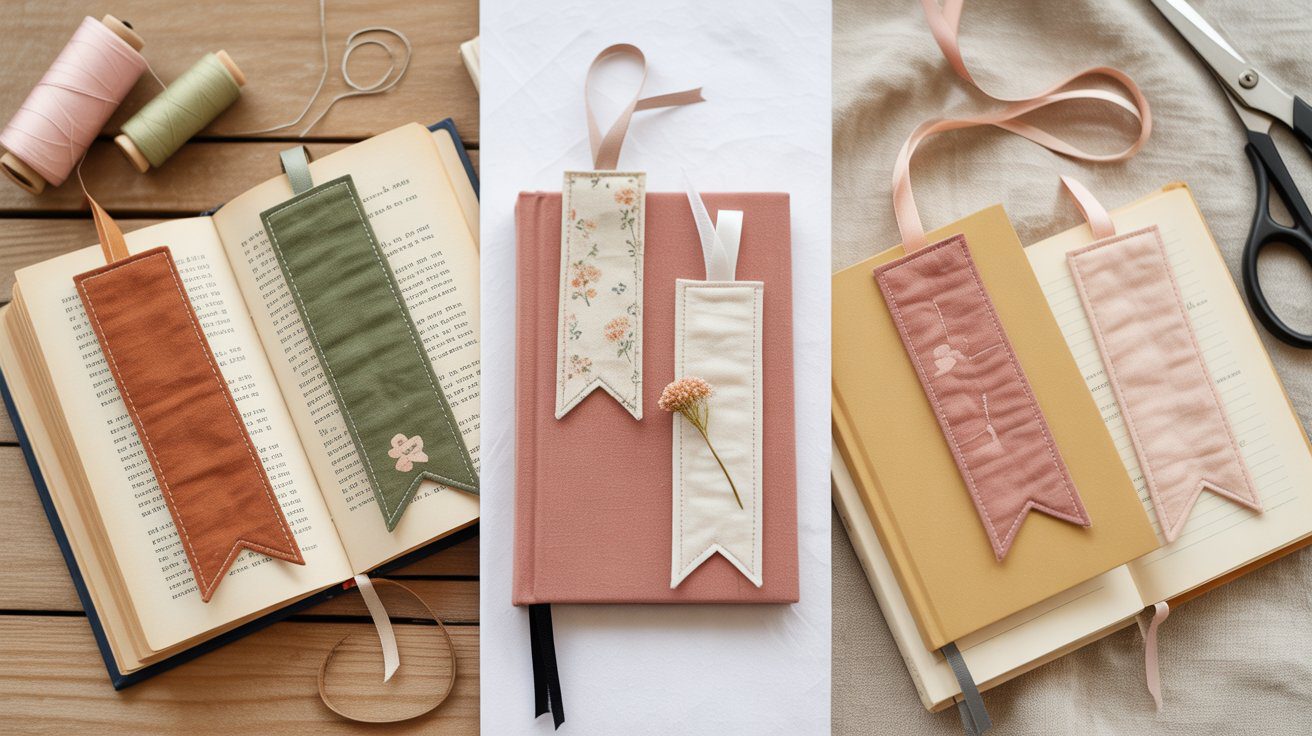

There’s always that moment when you open a book, a journal, or a planner and realize you need a bookmark — not a fancy one, just something that works. If you sew, chances are you already have the perfect solution sitting in a drawer: fabric scraps.
This tutorial shows exactly how to turn those small leftover pieces into a simple fabric bookmark, step by step. It’s a quick project, easy to follow, and designed to create a clean, sturdy result you’ll actually use. Once you know this basic method, you can adapt it to any fabric, color, or style you like.
Materials Needed to Make a Fabric Scrap Bookmark
This is one of those projects where you don’t need to buy anything new. Most of the time, these are already on the sewing table.
- Cotton fabric scraps
- Fusible interfacing (optional, for structure)
- Sewing machine or hand needle
- Thread
- Scissors or rotary cutter
- Iron
- Pins or clips
If the fabric is very soft or lightweight, adding interfacing helps the bookmark hold its shape and feel more finished.
Recommended Size for a Fabric Scrap Bookmark
A simple, practical size that works well for most books is:
- Two rectangles: 2 × 7 inches (about 5 × 18 cm)
This size slides easily between pages without sticking out too much, but it’s easy to adjust if you prefer something longer or wider.
How to Make a Simple Fabric Scrap Bookmark (Step-by-Step)
- Step 1: Cut the Fabric
Cut two rectangles from your fabric scraps. If you’re using interfacing, fuse it to the wrong side of one piece before sewing.
- Step 2: Place Fabric Right Sides Together
Place the two fabric pieces with the right sides facing each other. Pin or clip around the edges to keep everything aligned.
- Step 3: Sew Around the Edges
Sew around all four sides using a small seam allowance (about ¼ inch). Leave a short opening on one side so the bookmark can be turned right side out.
- Step 4: Trim the Corners
Trim the corners carefully. This small step helps reduce bulk and makes the edges look cleaner once the piece is turned.
- Step 5: Turn and Press
Turn the bookmark right side out through the opening. Gently push out the corners, then press everything flat with an iron, folding the raw edges of the opening inward.
- Step 6: Topstitch for a Clean Finish
Topstitch close to the edge all the way around. This closes the opening and gives the bookmark a neat, durable finish that holds up with use.
Easy Customization Ideas for Fabric Scrap Bookmarks
Once the basic bookmark is finished, it’s easy to personalize it with small details:
- Add a ribbon or fabric loop at the top
- Use contrasting thread for visible stitching
- Quilt a few straight lines for texture
- Combine two different prints for a reversible look
- Add a small fabric label or tag
These simple changes make each bookmark feel unique, even when sewing several at once.
Why Fabric Scrap Bookmarks Make Great Handmade Gifts
There’s something special about a gift that’s small, useful, and clearly made with intention. Fabric scrap bookmarks fit right into that space. They don’t feel like clutter, they don’t take up room, and they’re actually used — which is rare with handmade gifts.
Because they’re lightweight and quick to sew, fabric bookmarks are perfect when you want to make something meaningful without overcomplicating the process. They work especially well for people who read, journal, or love simple handmade touches in their daily routine.
- teacher gifts
- book lover gifts
- stocking stuffers
- small handmade sets
And since they can be sewn in batches, they’re ideal when you need several gifts that still feel personal — not rushed or generic.
More Scrap Sewing Projects to Explore
If this kind of project is your style, these other scrap sewing ideas are worth a look:
- DIY Fabric Scrap Bookmark Ideas
- 15 Scrap Sewing Projects You Can Make in a Weekend
- Small Scrap Fabric Sewing Projects
- Easy Patchwork Projects Using Fabric Scraps
Final Notes
This fabric scrap bookmark tutorial focuses on a simple method that’s easy to repeat and adapt. It’s the kind of project that fits into a quiet afternoon and makes good use of scraps that would otherwise be forgotten.
