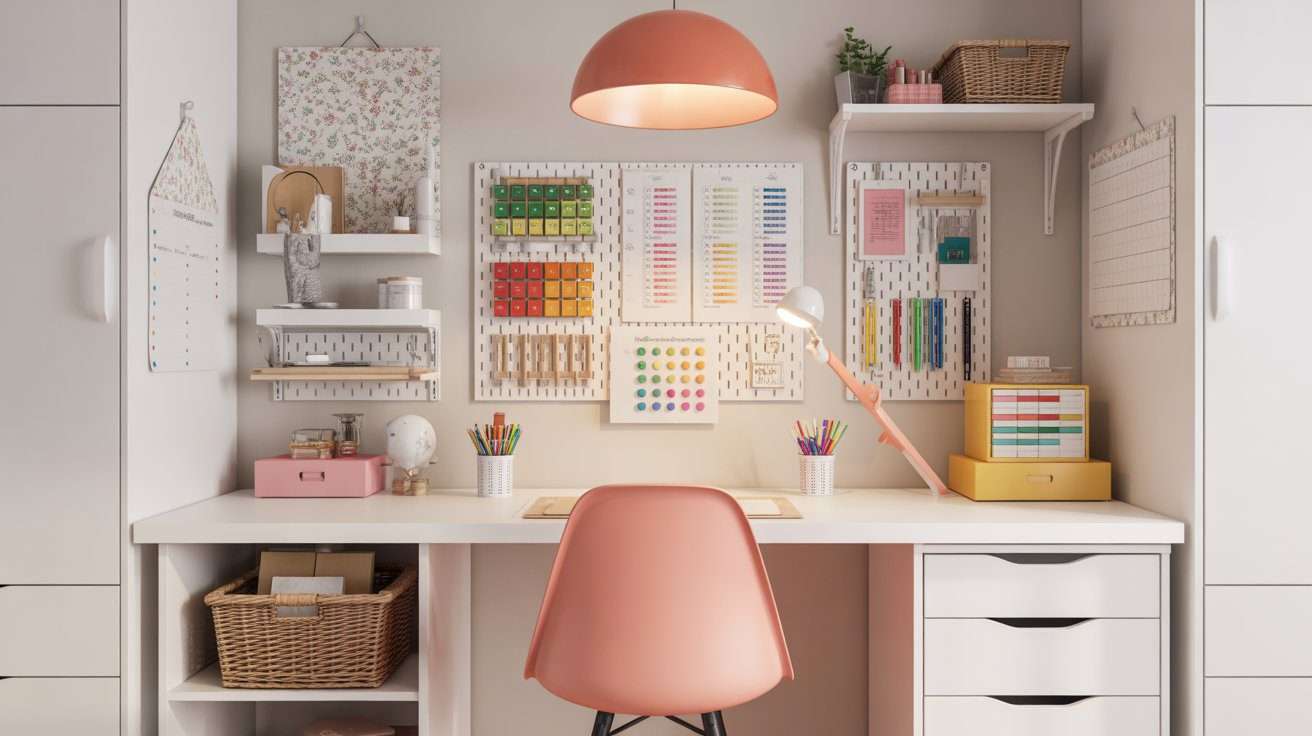

If your craft room is small, you don’t need more ideas — you need ideas that actually work. A small craft space has to be practical, flexible, and easy to maintain, especially if you sew, work with fabric scraps, or switch between different projects.
These small craft room ideas focus on real solutions for limited space, not just pretty setups that fall apart after one week.
Looking for more craft room inspiration?
If you want a broader look at craft room layouts, storage ideas, and setups for different types of creatives, check out my full guide to 12 Genius Craft Room Ideas — it covers everything from sewing spaces to organization solutions.
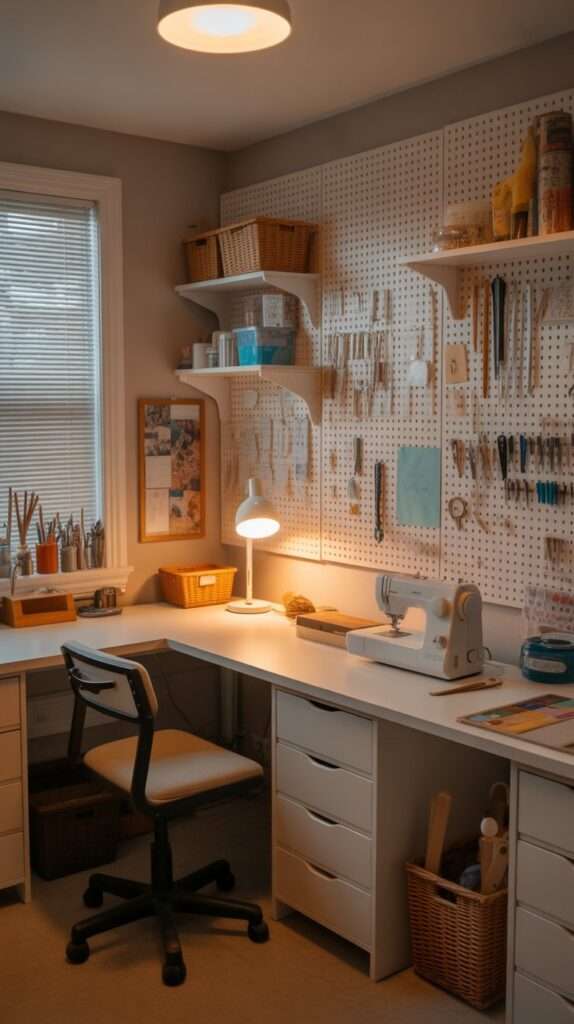
1. Use Vertical Space Instead of More Furniture
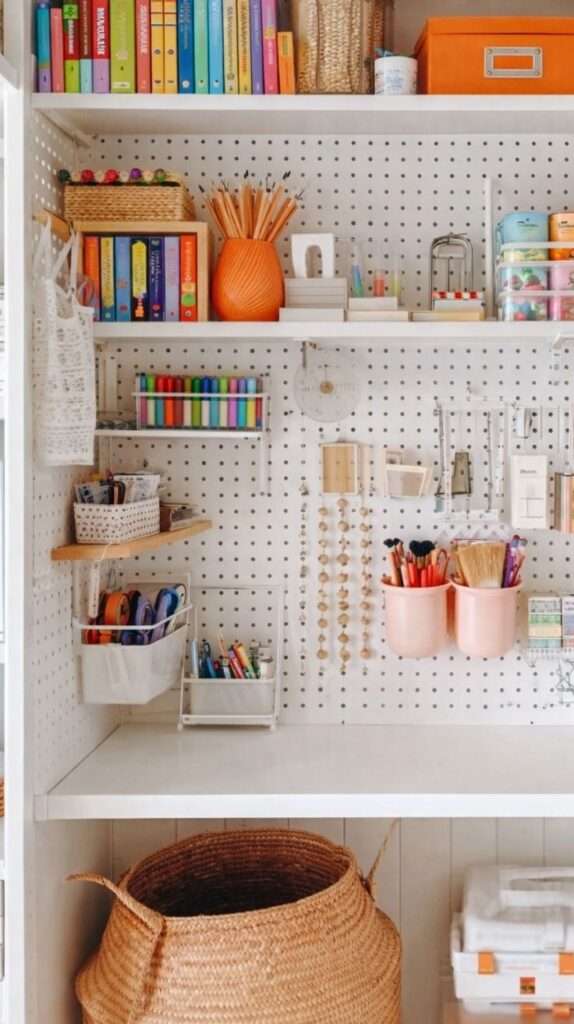
When space is limited, walls matter more than floors. Vertical storage keeps supplies visible without crowding your workspace.
Why it works:
Shelves, pegboards, and wall hooks free up table space and make daily tools easier to grab.
2. Turn a Corner Into a Dedicated Craft Zone
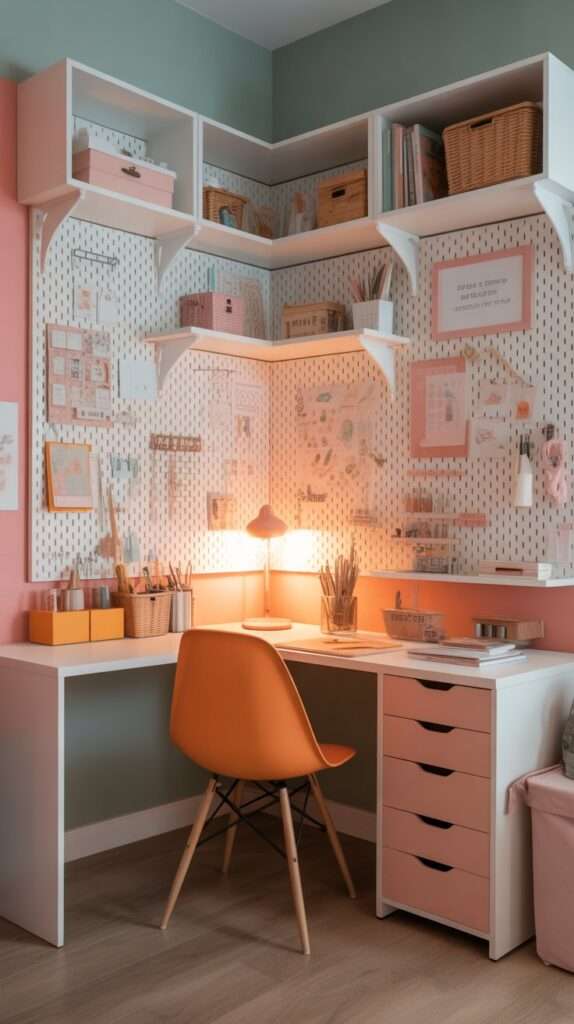
You don’t need a full room to craft. A single corner can work if it’s set up with intention.
Why it works:
A corner setup helps define your craft space mentally, even in shared rooms like bedrooms or offices.
3. Choose One Main Work Surface
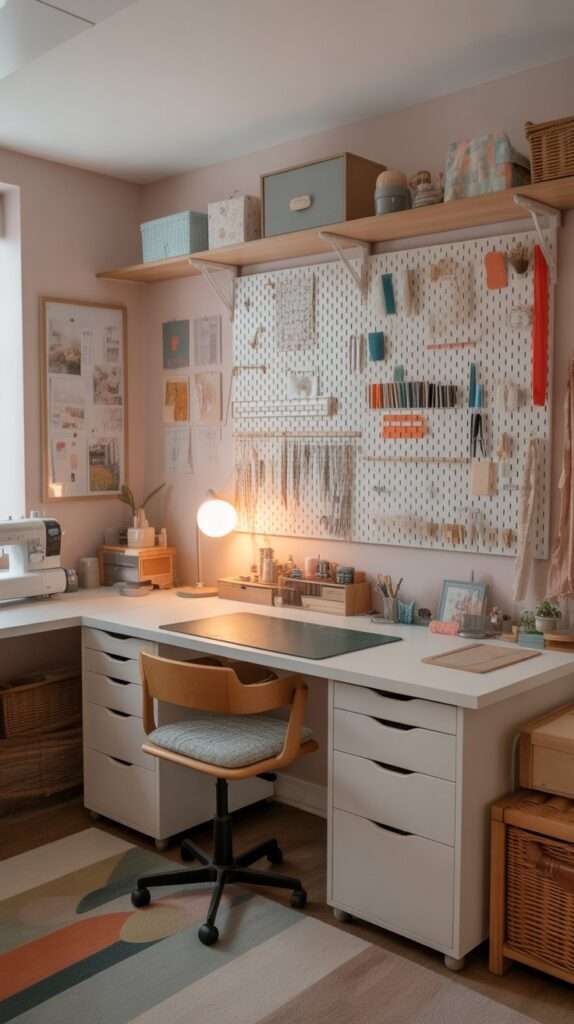
Too many small tables create clutter. One solid surface works better than three weak ones.
Why it works:
A single desk or table can function as a sewing station, cutting area, and planning space.
4. Rolling Carts Are a Small Craft Room Essential
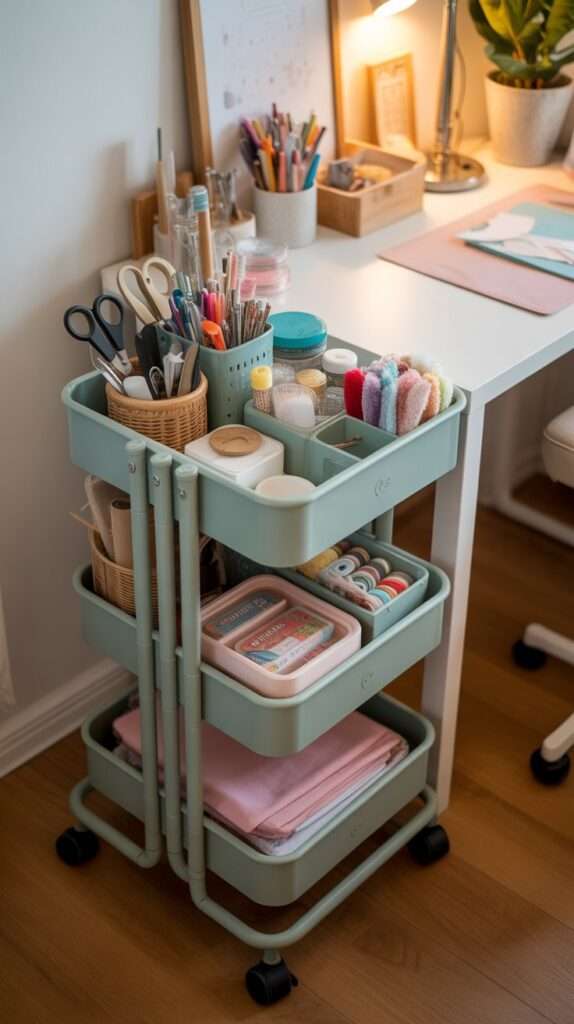
Rolling carts are one of the most useful items in small craft rooms.
Why it works:
They move with you, hold a lot, and can be tucked away when not in use.
5. Store Fabric Vertically, Not in Piles
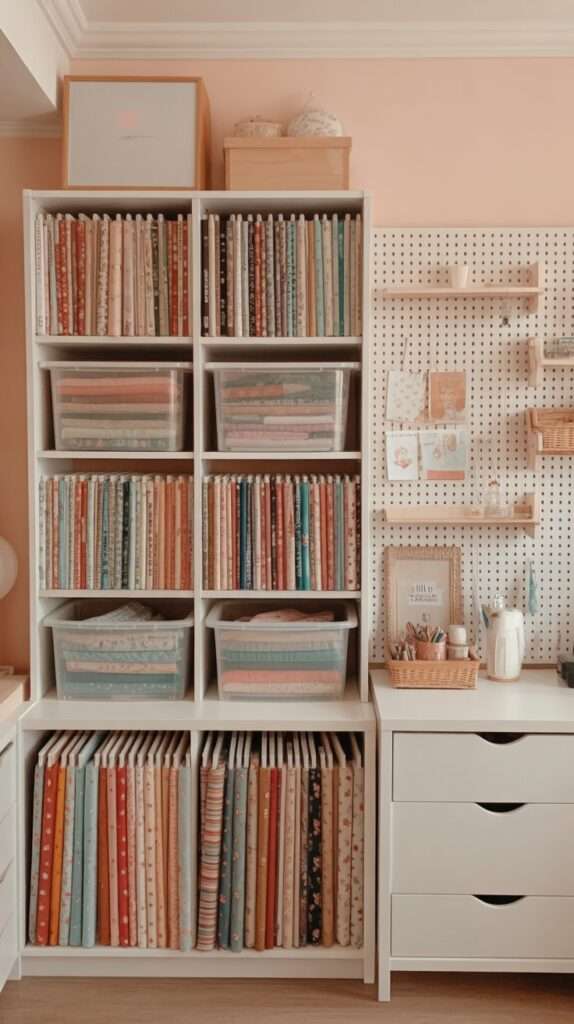
Fabric stacks eat space fast. Vertical storage makes a big difference.
Why it works:
You can see everything you own and avoid digging through piles or forgetting what you have.
6. Keep Only Active Projects Within Reach
Not every project needs to live on your desk.
Why it works:
Limiting your workspace to current projects keeps the room functional and less overwhelming.
7. Use Clear Containers for Small Supplies
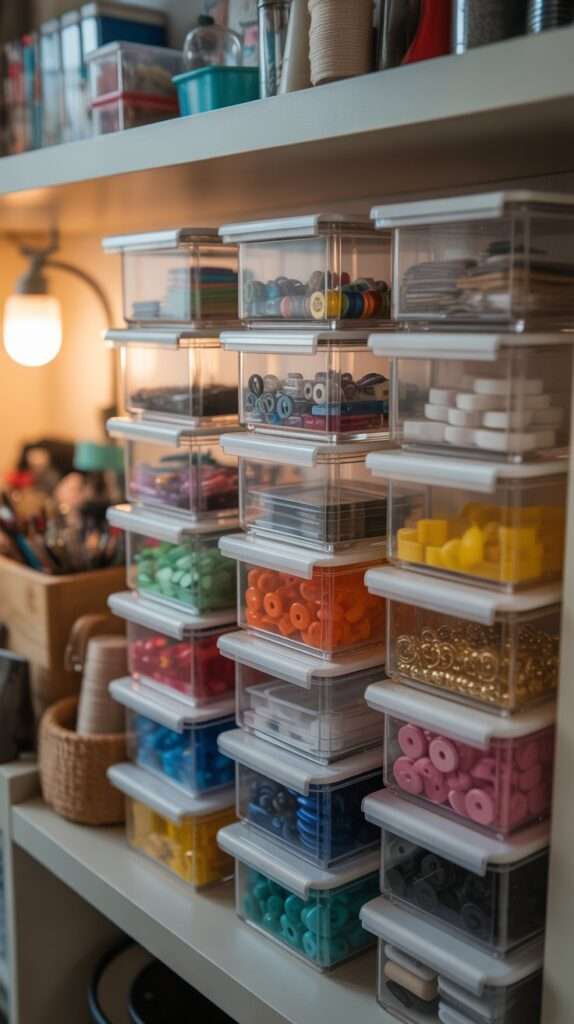
In small spaces, hidden clutter becomes chaos.
Why it works:
Clear containers make it easy to find thread, buttons, ribbons, and sewing tools without opening everything.
Want to see more craft room setups?
This post focuses on small spaces, but I’ve put together a complete list of 12 Genius Craft Room Ideasfor different layouts, styles, and creative needs.
8. Add Lighting Where You Actually Work
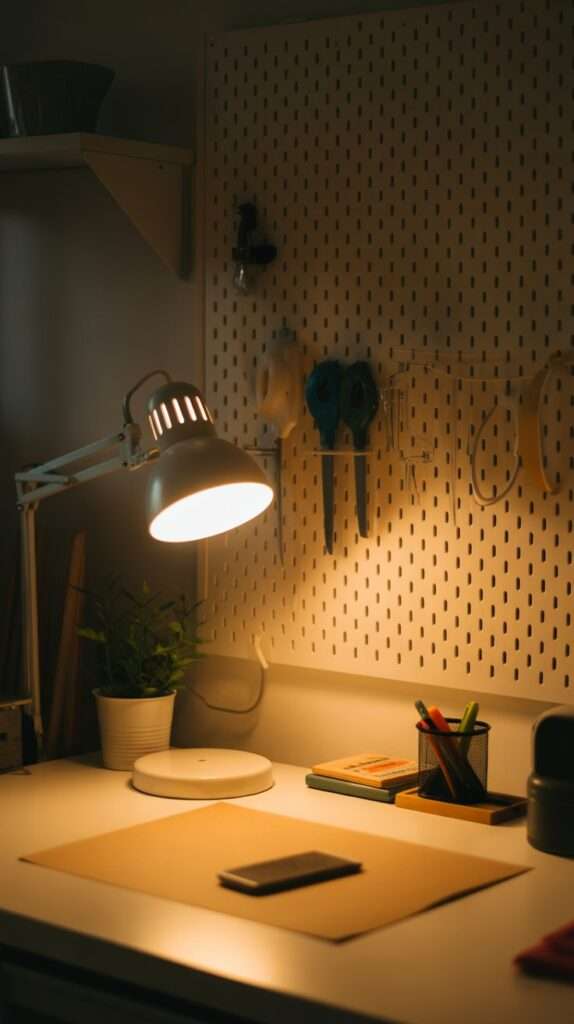
Good lighting matters more in small rooms than large ones.
Why it works:
Focused task lighting reduces eye strain and makes detailed sewing and cutting easier.
9. Create a Simple Scrap Fabric System
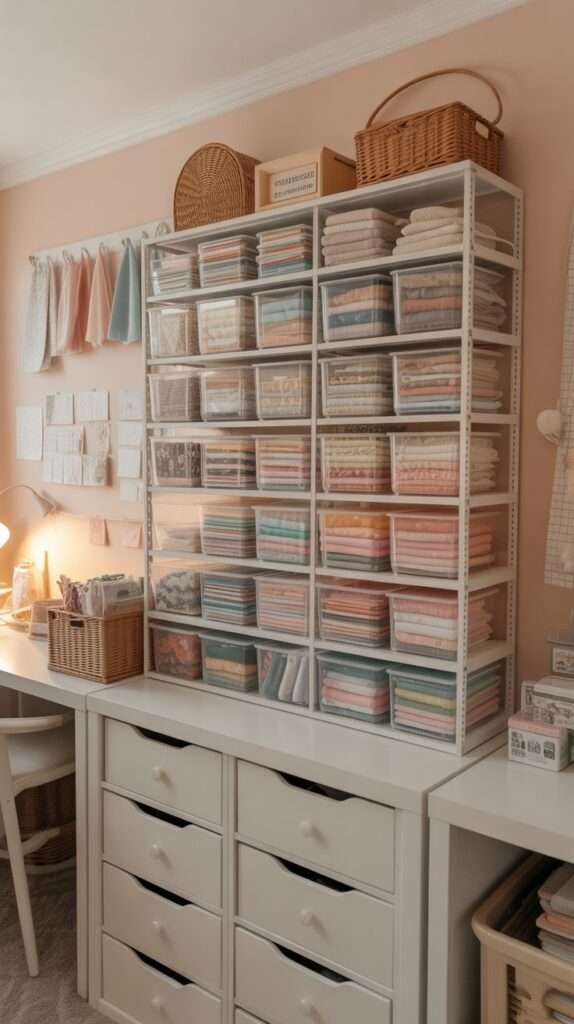
Scraps grow fast and get messy quickly if there’s no system.
Why it works:
Sorting scraps by size or type keeps them usable instead of overwhelming.
10. Accept That Small Craft Rooms Must Be Flexible
A small craft room works best when it adapts to how you create.
Why it works:
Foldable tables, movable storage, and modular setups prevent frustration in tight spaces.
Final Thoughts
Small craft rooms don’t need to look perfect — they need to function well. When space is limited, every choice should support how you actually sew, cut, store, and create. Start with one change, adjust as needed, and let your space evolve with your projects.

